Tajikistan Overview
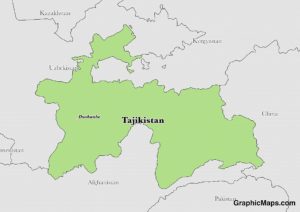
Tajikistan is an independent republic on the southern tip of Former Soviet Central Asia. Tajikistan’s total land area is 143, 100 sq km, making it slightly smaller than Wisconsin.
Beautiful and remote, Tajikistan has much to offer to mountaineers, hikers, rock climbers and hunters worldwide. Some of the highest mountains take up most of Tajikistan’s territory, where the wild and most exclusive Marco Polo Argali inhabit.
The populated valleys have a rich history. In former times, Tajikistan was at the crossroads of Asia and four major Silk Road routes passed through the Pamir, often referred to as the “Roof of the World” and the Fann mountains. These mountains are most impressive, with some of the most unapproachable peaks and terrains, as well as over 1000 mountain lakes.
Today Tajikistan is in the process of strengthening its democracy and transitioning to a free market economy after the 1992-1997 civil war. There have been no major security incidents in recent years, although the country remains the poorest in the former Soviet sphere.
Climate:
Despite its relatively small land area, the climate in Tajikistan varies widely, due to the country’s mountainous topography. The climate in lowland Tajikistan is moderate in spring (March through May) and fall (September through November). In cities, daytime temperature averages around 20-30°C. Summer can be ferociously hot, often times exceeding 40°C. Fall is one of the best times to be in Tajikistan, as the local markets – bazaars are full of melons, watermelons, grapes and other fruits. While winter is rather mild in cities, with some snowfall between December and February, it reaches extreme polar temperatures in the mountains. Precipitation is high, and most times mountains passes are closed till the roads are cleared.
Hunting Area:
Hunting in Tajikistan is conducted in one of the most remote and barren spots on Earth. Many find it incredible how the small, quaint villages in such areas survive, let alone make their living. Here, some of the highest mountain ranges on earth congregate – the Karakoram and Himalayas to the south, the Hindu Kush to the west, and the Tian Shan to the east. Hunting takes place in Central Pamir Mountains in Gorno-Badakhshan region. A network of high and wide valleys are draped around peaks reaching over 7000m (23, 000ft), the highest of which is the Peak of Somoni at 7495 m (24, 600ft). Worth mentioning are also the highest mountain salty lake Karakul and the biggest glacier Fedchenko (77m ~ 252ft). If you like it vertical, Tajikistan has the landscape for it.
Due to remoteness of the area and the physical strain required for this type of hunting that not everybody can cope with, game population is remarkable. Most are able to sight over 40-60 Marco Polo rams within the first hours of hunting. You’ll be staggered by the number and size of horns that came from sheep killed by wolves, age and/or winter. The sheep rarely descend lower than 3000m (10, 000ft). Russian 4X4 jeeps are used to transport you to a base camp generally situated at 13, 000ft above the sea level. The drive is scenic, but arduous due to rugged roads and continuous ascension as you will most likely start feeling the high altitude pressure at 8,000ft already.
The region is often described as the ‘polar desert’. Not only does it pose challenge in terms of high altitude terrain, but also temperature wise that can get extremely cold and windy. Weather at such altitudes is rather unpredictable. Even the most experienced hunters may experience altitude sickness, in which case Diamox is recommended to prevent pulmonary edema or even brain swell. To this reason we also insist that you take one-day adaptation to the climate and altitude at the base camp. Since the climate is dry, keeping oneself well hydrated is a must. Good physical condition is a necessity. In addition, check with your doctor before the trip. Proper clothes and equipment are also key to combating harsh conditions and to making your hunt more enjoyable. Please, see our Asian/MarcoPolo & Ibex Hunters’ Equipment Checklist for recommended outerwear, equipment, medication and other personal items.
Hunting Tajikistan: Marco Polo, Markhor, Urial, Ibex and Boar
Tajikistan produces the largest Marco Polo rams in the world, and it also holds the rarest goat in the world. Those are two very different hunts, at different elevations, in different months, and they are covered separately below.
Marco Polo sheep — the Pamir hunt
These are the true Marco Polo, and the numbers speak for themselves: the average ram runs in the mid 50-inch range, and since 2014 our hunters have averaged 57 inches, with roughly one ram in seven going over 60. If a 60-inch ram is the goal of your hunting life, this is the ground it happens on.
Ibex are taken on the same hunts and typically run 38 to 45 inches.
This is a rut hunt, and it is demanding. Base and spike camps sit between 10,000 and 14,000 feet, and the hunting itself goes from camp elevation up to 16,500 — early-season Tajik Marco Polo hunts are the highest hunting we offer anywhere. Most people do not suffer altitude sickness, but Diamox relieves most symptoms, and we take the first day or two easy so you can adjust. Arriving genuinely fit is not optional here.
Hunters see a great many animals, with densities varying by location. Spot and stalk is the method — we judge through spotting scopes before making the final stalk, and we do not chase animals. On cold late-season hunts we return to base camp at night; spiking out is an option only for the well prepared.
Markhor and Urial
Markhor is the rarest and most expensive Capra in the world, and a significant share of what a hunter pays goes directly to the local communities that protect it — which is precisely why there are markhor to hunt.
These hunts are a different country from the Pamir sheep: elevations of 5,000 to 7,000 feet, a three to five hour drive from Dushanbe, and a mix of hiking and horseback. Precise shooting out to 500 yards is expected.
Urial are, in our view, one of the great values in international sheep hunting.
Season: 1 September to 1 March, with most hunts taking place in November. Markhor and urial hunts run 7 to 8 days plus travel; a combination hunt is 11 to 12 hunting days.
Mid-Asian Ibex
We hunt ibex from 1 September to 1 March. Trophies range from 38 to 52 inches with a 42 to 45 inch average, and shooting distances run 250 to 500 yards. These ibex areas are lower than the winter-season ground elsewhere. Ibex can be added to a markhor or urial hunt, though they sit in a slightly different area.
Wild Boar
Wild boar here are strong, smart and genuinely elusive, and they are widely distributed — the climate suits them and numbers are good. A full-grown boar weighs between 120 and 300 kilograms, with tusks around 20 to 25 centimetres. Shooting ranges are typically 150 to 300 yards, and the hunting is mostly spot and stalk, with ambush, driven hunts and tracking in snow all used where they suit. Boar hunts run five days for groups of two or three, and it is common to see boar while hunting other species.
Getting there
Hunters fly into Dushanbe, most commonly through Istanbul. A Tajik visa is obtained online before you travel.
For the Pamir sheep hunts, understand what the journey involves: it is 19 to 23 hours by 4×4 from Dushanbe to base camp, normally broken with a night in Khorog. That is the price of hunting one of the most remote places on earth. The markhor, urial and boar areas are far closer — three to five hours from the capital.
Sample itineraries
Marco Polo — a 15-day schedule, arrival to departure in Dushanbe, with 7 to 9 hunting days:
- Day 1 — arrive Dushanbe
- Day 2 — drive to Khorog, 12 to 14 hours
- Day 3 — Khorog to base camp, 6 to 8 hours depending on weather
- Days 4–12 — hunt, or leave early for Dushanbe if you finish
- Days 13–14 — return via Khorog to Dushanbe
- Day 15 — fly home
Urial, ibex or markhor — a 10 to 11 day schedule, with hunting on days 2 through 9. A markhor/urial or urial/ibex combination runs longer. Ibex and boar can also be done on a five-day schedule.
Camps
Accommodation depends on species and season — well-equipped base camps with stock corrals and trophy care facilities, village houses, or tent camps, heated by coal or dung-burning stoves. Spike camps are set up where the hunting requires it. Food is basic and good; bring your own snack foods and instant coffee, and a filter or purification tablets if you are cautious about local water.
What the hunt includes
- Travel and permit arrangements
- All hunting licenses and tags
- Tajik export CITES and veterinary certificate
- A local guide and assistant per hunter, and an interpreter
- Transportation during the hunt, by jeep and horse
- Lodging and meals in camp
- Trophy skinning and preparation
- One night’s lodging in Dushanbe and one in Khorog
What it does not include
- International flights to Dushanbe
- Additional nights’ lodging in Dushanbe
- Tips and gratuities for guides, drivers, interpreters, camp staff and management
- Emergency medical and evacuation cover such as Global Rescue or Ripcord
- Trophy shipping and brokerage. Under CITES regulations, markhor and urial trophies must be shipped later — only ibex can be taken home with you.
- A non-hunting companion, observer or cameraman
- Side trips and personal spending